
Oyster Mushroom Farming at Home: Process, Investment and Profit
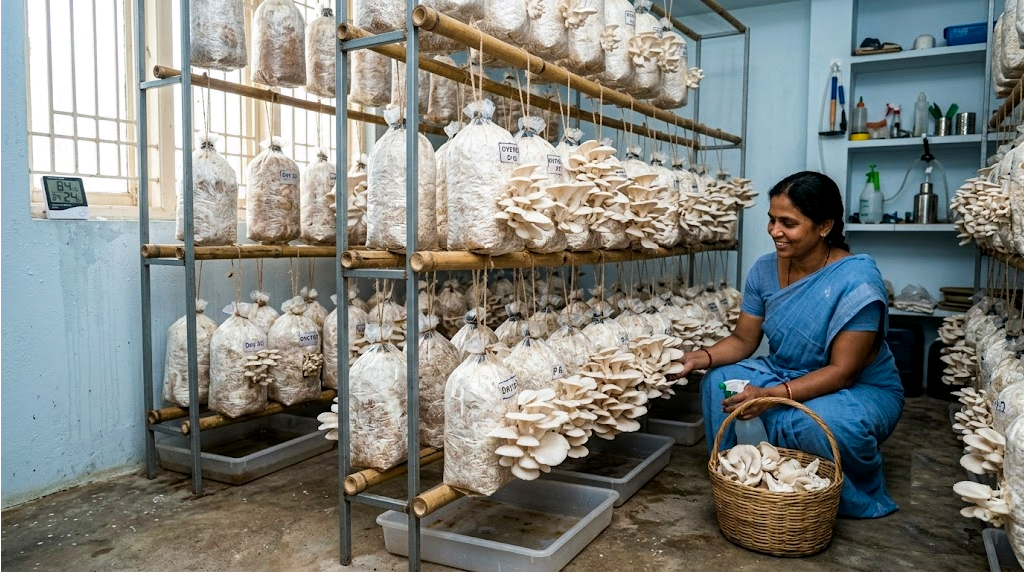
Oyster mushroom farming at home is one of the most profitable and easiest agricultural businesses to start in India. With low investment, minimal space, and healthy food trends among the population, oyster mushroom farming is a great opportunity for farmers, homemakers, students, and entrepreneurs.
Most of the agricultural business ideas require big land and capital investment, but oyster mushroom farming can be started in a small room, shed, or even in a corner of your home. The short farming cycle and high demand make it a great business idea for people wanting to have a side income.
This guide explains everything you need to know about oyster mushroom farming at home, from setup, process, investment, cost, yield, and profit.
What are Oyster Mushrooms?
Oyster mushrooms (Pleurotus species) are one of the most famous cultivable edible mushrooms. They have a wide cap shaped like an oyster and are easy to grow and quite nutritious.
Why are Oyster Mushrooms Healthy?
Oyster mushrooms are a great source of:
- Protein
- Fiber
- Vitamins B and D
- Iron, Potassium
- Antioxidants
Mushrooms are a healthy, low-calorie, and nutritious food and are becoming increasingly popular among health-focused consumers.
Why Cultivate Oyster Mushrooms?
Prospective farmers may find oyster mushroom farming appealing due to a number of benefits.
Low Startup Costs
Open a small farm with a modest budget.
Low Space Requirements
Cultivation can occur in:
- Small rooms
- Sheds
- Backyards
- Unused spaces inside homes
Short Growing Cycle
Grown mushrooms can be harvested in 30 to 45 days.
High Demand
Mushrooms are purchased by a range of consumers, including
- Restaurants
- Supermarkets
- Hotels
- Health-conscious individuals
Easy Farming Process
Oyster mushrooms are simpler to farm than other varieties.
Growing Requirements of Oyster Mushrooms
Controlled growing conditions are preferred by oyster mushrooms.
Optimal Temperature
20°C to 30°C
Relative Humidity
80% to 90%
Lighting
Indirect or diffused sunlight
Ventilation
To avoid contamination, adequate ventilation must be provided.
Many areas of India support seasonal oyster mushroom farming.
Similarly, natural pest control methods help manage crop pests without causing unnecessary harm to the environment.
Natural farming methods are also useful for mushroom cultivation. Read our guide on Vegetable Farming Techniques.
What You Need to Farm Oyster Mushrooms
The following materials must be obtained prior to farming.
Raw Materials
- Oyster mushroom spawn
- Paddy straw
- Wheat straw
- Water
Equipment
- Plastic growing bags
- Spray bottle
- Drums for straw treatment
- Racks or hanging arrangements
- Thermometer
- Hygrometer (optional)
For yield and profitability, the quality of mushroom spawn is very important.
Steps for Oyster Mushroom Farming
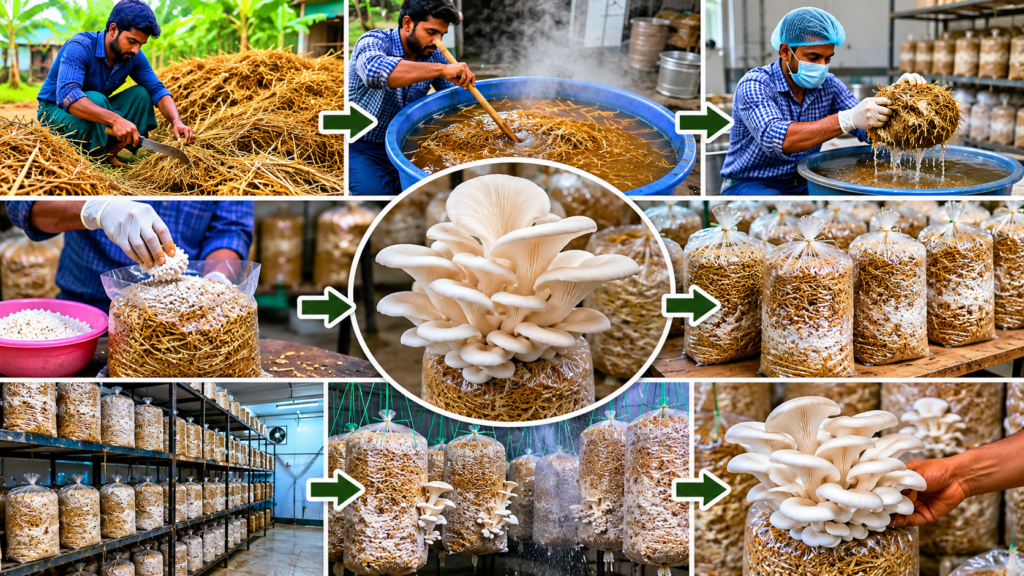
The following key steps are required in the farming process.
Step 1: Prepare the Straw
Paddy straw is the most commonly chosen growing medium.
Straw Preparation
- First, prepare the straw.
- Cut straw into small pieces
- Soak in clean water
- Pasteurize using hot water treatment
- Drain excess moisture
Properly treated straw helps reduce contamination risks.
Step 2: Bag Preparation
After the straw cools.
- Fill a layer of straw into a plastic bag
- Add mushroom spawn
- Repeat alternating layers
- Tie the bag securely
Small holes are made in the bags for air exchange.
Step 3: Incubation Period
Place the bags in a clean room.
Requirements:
- Dark environment
- Temp. b/t 20°C & 30°C
- Moderate humidity
The mushroom mycelium gradually spreads throughout the bag.
The incubation period generally lasts:
15 to 20 days
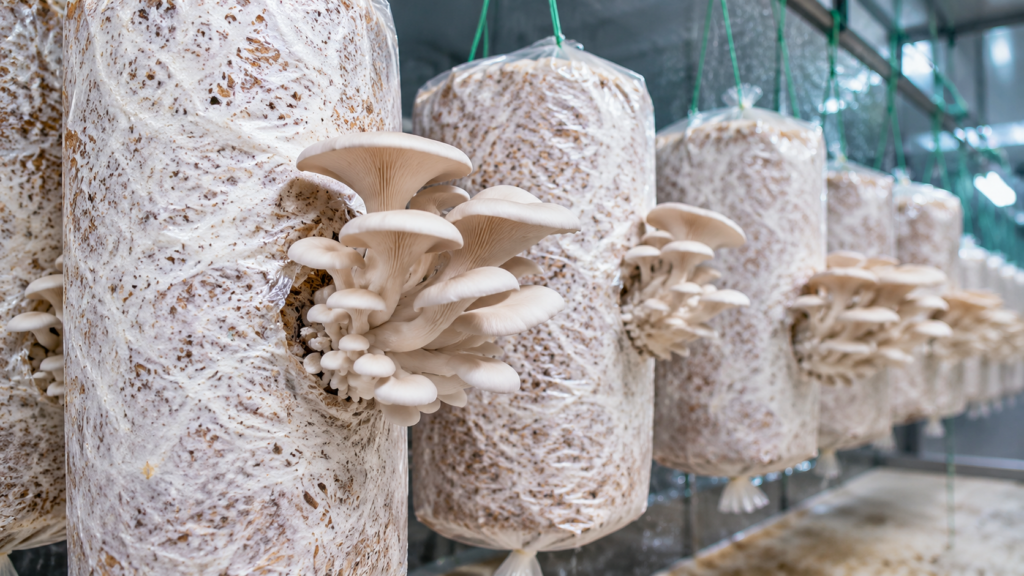
Step 4: Fruiting Stage
After full colonization:
- Move bags to a humid environment
- Provide indirect light
- Keep humidity > 80%
Small mushroom pins start appearing a few days later.
Step 5: Harvesting
Mushrooms should only be harvested once the caps are fully developed, but not once the edges start curling up.
Mushrooms should be cut with a clean knife and handled carefully to maintain quality.
Oyster Mushroom Farming Cost
Cost will depend on the size of the operation.
Small Home-Based Setup (100 Bags)
| Item | Estimated Cost |
|---|---|
| Mushroom Spawn | ₹2,000 |
| Paddy straw | ₹1,500 |
| Plastic Bags | ₹500 |
| Room Preparation | ₹2,000 |
| Misc. Expenses | ₹1,000 |
Total Investment
₹7,000 to ₹10,000
Most beginners will start with 50 to 100 bags.
Oyster Mushroom Yield
Four main factors determine yield.
1. Spawn quality
2. Straw quality
3. The environment
4. Hygiene
Under optimal management conditions, straw yield factors an average of 700 grams to 1 kilogram of fresh mushrooms per 1 kg of dry straw.
A setup of 100 bags yields large amounts for each growing cycle.
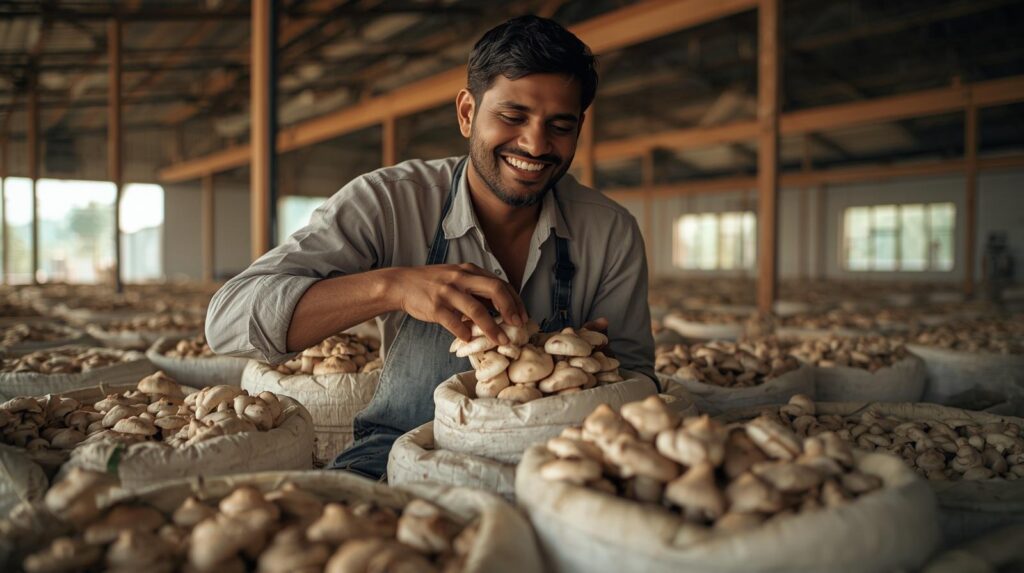
Oyster Mushroom Farming Profit
Oyster mushrooms are a great business, and for good reason. Their profitability also provides the most incentive to cultivate.
Example Profit Calculation
For 100 bags:
- Expected yield: 100 to 150 kg mushrooms
- Selling price: ₹150 to ₹250 per kg
- Revenue: ₹15,000 to ₹37,500.
After costs, these yields guarantee a great profit cycle.
Considering most farms are able to grow and harvest mushrooms multiple times per year, it is easy to see the potential to earn a large profit.
How to Increase Mushroom Yield
For maximum yield:
Spawn Quality
Low-quality spawn increases yield factors and promotes contamination.
Humidity
Humidity should be kept at 80 to 90%
Cleanliness
Cleanliness is key. Contamination is one of the main causes for fail crops.
Temperature
Low and high temperatures negatively impact growth.
Straw Treatment
Poor straw treatment is the leading contributor to low yield factors and high incident rates of contamination.
Common Mistakes
Most starters make rookie mistakes.
Hygiene
Dirty growing chambers promote contamination.
Overwatering
Watering promotes fungal and microbial contamination.
Poor Spawn
Low-quality spawn = low yield.
Ventilation
Ventilation is critical for growth.
Temperature
Overly hot or cold negatively impacts yield.
Avoiding these mistakes is the primary factor when it comes to turning a profit.
Selling Oyster Mushrooms
Effective execution of sales is a determining factor for growth.
Potential buyers include:
Local Vegetable Markets
Farmers have an advantage selling directly to consumers.
Restaurants and Hotels
Many restaurants prefer to source fresh mushrooms locally.
Supermarkets
Mushrooms are often purchased by retail chains from local producers.
Online Sales
Expanding the customer base using social media and local delivery can be valuable.
Health Food Stores
Health-conscious consumers are frequent buyers of fresh mushrooms.
Value-Added Mushroom Products
Scheduled to pick and sell fresh mushrooms weekly? Farmers can create a higher profit margin with processed products.
This can include:
- Dried mushrooms
- Mushroom powder
- Mushroom pickles
- Ready-to-cook mushroom kits
Adding value to a product can help a farmer stay profitable and improve the shelf life of the products.
Benefits of Oyster Mushroom Farming at Home
Low Initial Costs
As little as $100 can start this business.
Quick to Harvest
After a few weeks, a farmer can sell their first crop.
Year-Round Farming
This can be done at any time of the year if the growing conditions are right.
Waste Sustainability
Using agricultural waste, like paddy straw, to grow mushrooms converts waste to a food product.
High Demand
Consumers prefer healthier food.
Future of Mushroom Farming in India
The Indian mushroom market is growing rapidly for a number of reasons, such as:
- Health Awareness
- Mushroom as a Protein for Vegetarians
- Growth of the Restaurant Industry
- Changing Patterns of Consumers in Cities
With the increasing knowledge of mushroom cultivation, it is predicted that mushroom farming will play an important role in modern agriculture and entrepreneurship.
Final Thoughts
For the first time, possible agribusiness activities, oyster mushroom farming at home is one of the best. From small beginnings, this type of business can readily grow and expand based on the simple methods of cultivation and high market demand.
While helping to provide food for the world, farmers can also earn a living by following the right cultivation procedures, quality spawn, and proper hygiene.
Oyster mushroom cultivation is a way for you to get involved in the increasingly popular agricultural business, whether you are a farmer, a stay-at-home mom, a student, or a business owner.
Common Questions
How much does it cost to start an oyster mushroom farm?
A small home-based mushroom farm can be set up for around ₹7000 to ₹10,000.
What is the cultivation period for oyster mushrooms?
The growing period for oyster mushrooms is typically around 30 to 45 days.
Is it worthwhile to farm oyster mushrooms?
Oyster mushrooms can provide good profit potential with the right business practices and product sales.
Can oyster mushrooms be home-farmed?
Yes, oyster mushrooms can be grown indoors, in a shed, or in any type of controlled growing space.
What is the optimum temperature for growing oyster mushrooms?
The optimum temperature for oyster mushrooms is typically between 20°C and 30°C.