
Natural Farming in India: Complete Guide to Methods, Benefits, Cost and Profit

For centuries, agriculture is the backbone of India’s economy. Natural Farming in India follows nature’s principles and helps farmers grow crops sustainably. However, the excessive use of chemical fertilizers and pesticides has reduced soil fertility, increased production costs, and affected environmental health.
for example: To understand this better, think about our own health. when we regularly consume junk food or food loaded with chemicals, our health suffers over time. Similarly, the soil also experiences damage when it is continously exposed to unnecessary chemical inputs.
As a result, many farmers are shifting to natural farming in India. They are looking for a profitable and sustainable alternative to chemical farming. It promotes healthy soil, reduces the dependency on external inputs, and improves long-term farm productivity.
Whether you are a beginner or an experienced farmer. firstly, we should understand natural farming, that can help us to improve productivity, reduce costs, and achieve long-term sustainability.
What is Natural Farming?
Natural farming is an agriculture eco system that uses resources available on the farm. the goal is to create a self-reliable ecosystem. In this system soil, plants, animals, and microorganisms work together naturally.
For example, In a forest, no one uses fertilizers or anything to the trees. Yet, trees continue to grow strong and healthy nature maintains its own balance. Natural farming follows the same principle and applies it to agricultural fields.
Key Principles of Natural Farming
- No chemical fertilizers
- No synthetic pesticides
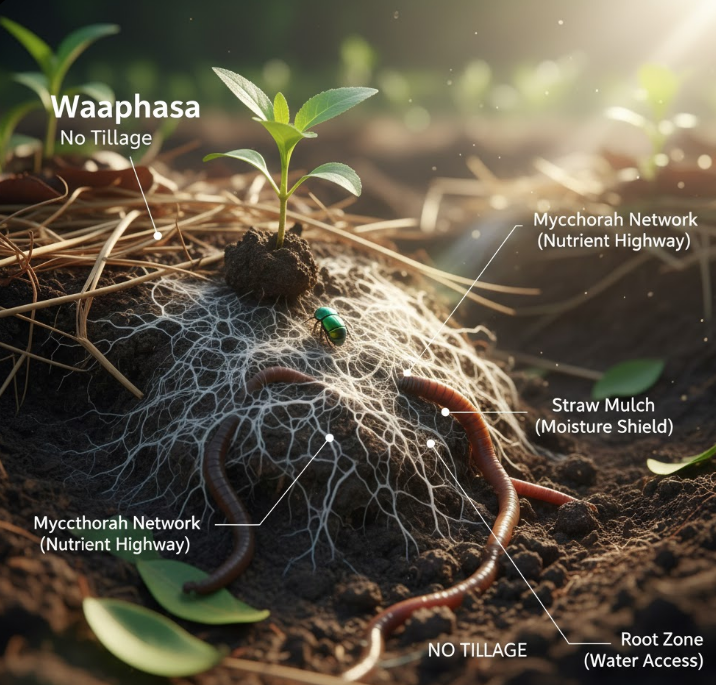
- Minimal disturbance to soil
- Use of natural microbial cultures
- Mulching and soil cover
- Mixed cropping and biodiversity
- Water conservation practices
Methods of Natural Farming
Several natural farming methods are practiced across India. Among them, Zero Budget Natural Farming(ZBNF) is one of the most popular approches.
1. Zero Budget Natural Farming (ZBNF)
Zero budget natural farming aims to reduce farming costs by using resources that are already available on the farm. We can prepare natural fertilizers and growth promoters without purchasing expensive external inputs.
The two most important components of ZBNF are Beejamrutham and Jeevamrutham.
Beejamrutham:
Beejamrutham is a natural seed treatment prepared by using cow dung, cow urine, lime, and soil. Before sowing the seeds are treated with this solution.
Benifits of Beejamrutham:
- It prevents seeds from getting diseases.
- It helps them to sprout faster.
- Improves early plant growth
Ex: Just as a pregnant mother takes care of her child by providing proper nutrition for healthy development, Beejamrutham provides protection and nourishment to seeds before they begin their growth journey.
Jeevamrutham:
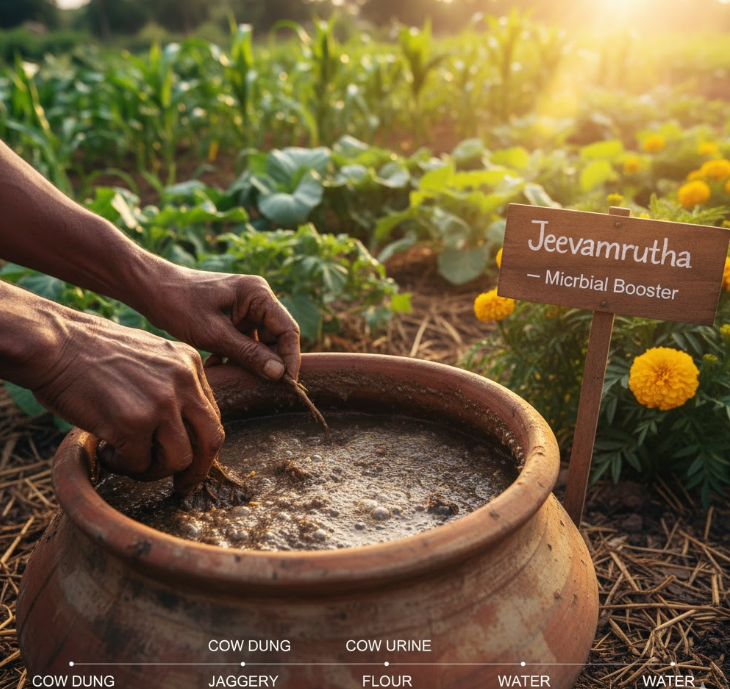
Jeevamrutham is a natural microbial mixture prepared by using cow dung, cow urine, jaggery, gram flour, and local soil.
This solution acts as food for beneficial microorganisms and earthworms present in the soil.
Benifits of Jeevamrutham:
- Improves nutrient availability
- It promotes healthy root development
- Increase Microbial activity
- Enhances soil fertility
For example: Whenever our body becomes tired, we often consume nutrious drinks or energy-rich foods to regain strength. Similarly, Jeevamrutham provides nourishment to benificial microorganisms in the soil, helping them remain active and productive.
2. Mulching (Acchadana):
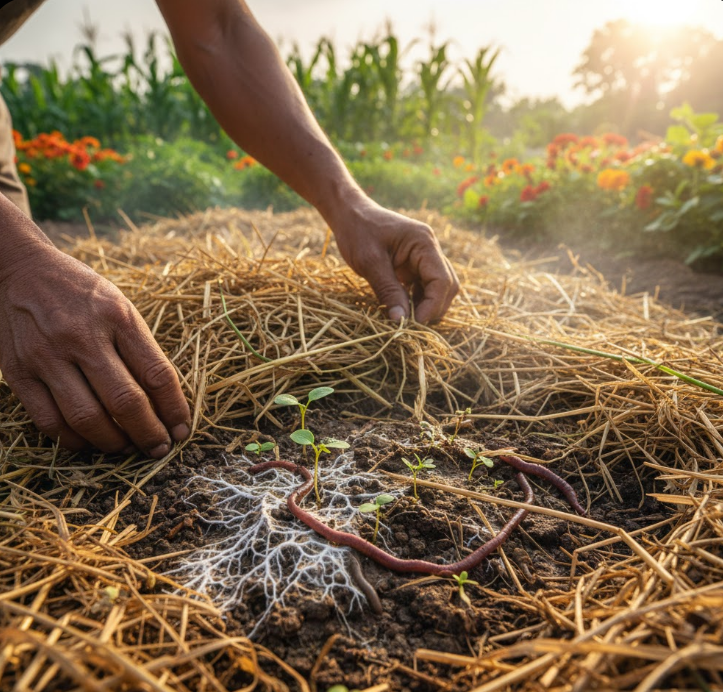
Mulching involves covering the soil with crop wastage, dry leaves, straw or other organic matter.
Benifits of Mulching:
- reduces weed growth
- Prevents soil erosion
- Keeps moisture in soil
- Improves Soil health
- Regulates soil temperature
For example:- Just as we use an umbrella during summer or a blanket during winter for protection, mulching protects the soil from excessive heat and moisture loss.
3. Mixed Cropping & Biodiversity
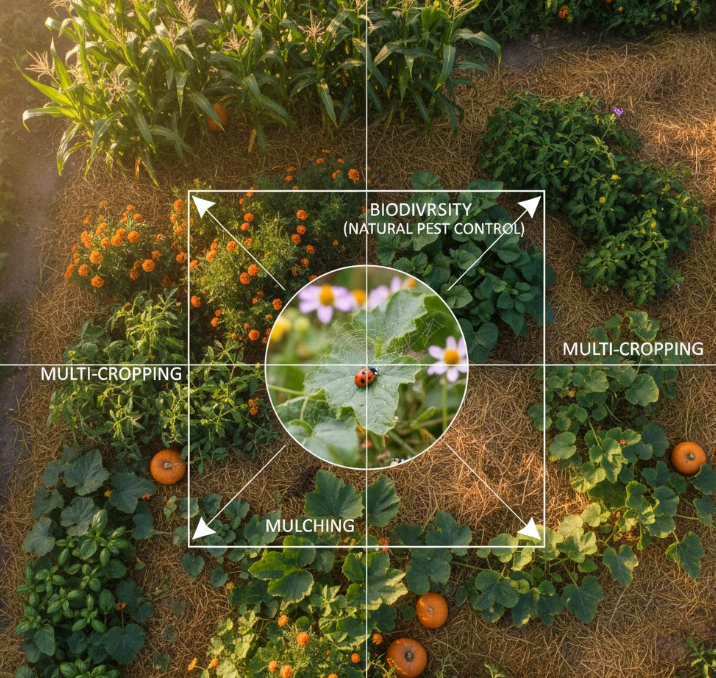
Mixed cropping is like growing different crops together in the same field. This practice improves biodiversity and reduces the risk of pest infestations.
common Examples:
- Corn + Beans
- Coconut + Banana
- Vegetables + Legumes
Benifits of Mixed Cropping:
- Improves nutrient cyclinng
- Reduces pest attacks
- Increases biodiversity
- Minimizes crop failure risk
Ex :- Just as we eat a balanced diet that includes rice, vegetables, and pulses to obtain different nutrients, growing multiple crops together helps maintain balanced soil nutrition.
4. Natural Pest Management
Natural pest management focuses on controlling pests using natural alternatives instead of chemical pesticides.
Common Natural Pest Control Methods:
- Neem Oil spray
- Chilli-garlic extract
- Cow urine-based solutions
Benifits:
- Controls harmful pests
- Protects beneficial insects
- Reduces chemical residues
- Maintains ecological balance
Ex :- Instead of taking powerful antibiotics for a minor cold or cough, we drink our traditional grandma’s homemade Ginger-Pepper remedy.
Similarly, natural pest control methods help manage crop pests without causing unnecessary harm to the environment.
Natural farming methods are also useful for Vegetable cultivation. Read our guide on Vegetable Farming Techniques.
Benefits of Natural Farming in India
Farmers who practice natural farming often integrate livestock into their farms. Learn more in our guide on Dairy Farming Business Plan in India.
Reduced Production Cost
We can significantly reduce our expenses. Moreover, by preparing our own fertilizers on the farm.
Improved Soil Health
Moreover, natural farming increases microbial activity and improves organic matter content, resulting in healthier soil.
Better Water Retention
Healthy soil retains more moisture for longer periods As a result, irrigation requirements are often reduced.
Safe and Healthy Produce
Consumers are preferring chemical-free food products. Therefore, naturally grown produce often attracts better market prices.
Long-Term Sustainability
Natural farming supports ecological balance and helps conserve natural resources for future generations.
Cost of Natural Farming in India Per Acre
One of the biggest advantages of natural farming is its lower cost structure. Comparing to chemical farming, natural farming costs approximately about 10000 to 25000 per acre, depending on the crop and management practices.
Typical Cost Breakdown Per Acre
| Expense | Estimated Cost |
|---|---|
| Seed | ₹2,000 – ₹5,000 |
| Jeevamrutham Preparation | ₹500 – ₹1,500 |
| Mulching Materials | ₹1,000 – ₹3,000 |
| Labor | ₹5,000 – ₹12,000 |
| Irrigation | ₹2,000 – ₹5,000 |
Is Natural Farming in India Profitable?
Yes. Natural farming in India can become more profitable overtime because:
- Lower Investment cost
- Increasing of Soil fertility
- Better market demand for chemical-free produce
- Reduced dependence on purchased inputs
- Improved long term sustainability
However,
Profitability depends on:
- Crop selection
- Market availability
- Farm Management
- Climate conditions
- Water availability
Natural Farming in India for Beginners
If you are planning to start natural farming, follow these practical steps:
Step 1: Start Small
Begin with a small area before converting your entire farm.
Step 2 : Improve Soil Health
Use compost, Livestock manure, and microbial cultures to improve soil fertility naturally.
Step3: Use local Seeds
Traditional seed varieties often grow better in natural farming conditions.
Step4: Practice Crop Diversity
Grow multiple crops to reduce risks and improve biodiversity.
Step5: Monitor Soil and Crop Health
Regularly observe plant growth and respond to problems using natural solutions whenever possible.
Common Challenges in Natural Farming
Initial Yield Reduction
Some farms experience temporary yield reduction during the crop change.
Knowledge Gap
Farmers need to learn new methods and management practices.
Market Development
Additional effort may be required to find buyers for natural products.
Labour requirements
Some natural farming methods may require more labour initially.
Future of Natural Farming in India
The future of Natural farming in India is giving hopes due to the following reasons:
. Growing consumer demand for healthy food
- Government support programs
- Increasing awareness of sustainable agriculture
- Rising fertilizer costs
- Greater focus on environmental conservation
As more farmers adopt eco-friendly farming practices, natural farming is expected to play a important role in the future of Indian agriculture.
Conclusion
Natural farming in India offers a sustainable and practical approach to agriculture. It helps farmers reduce production costs, improve soil health, and produce safer food.
Whether you are intersted in Zero Budget Natural Farming or simply want to reduce chemical inputs, natural farming provides effective solutions for modern agriculture challenges.
With proper planning, patience, and consistent implementation, farmers can achieve long-term profits while protecting the environment for future generations.
FAQ's About Natural farming in India
1. What is Natural farming?
Natural farming is a chemical-free farming method. It relies on natural resources like cow dung, cow urine, compost and beneficial microorganisms.
2. Is Natural farming profitable?
Yes. Natural farming can be profitable in the long run because it reduces input costs, improves soil health over time. As a result, crop yields become more stable and sustainable and allows farmers to sell chemical-free products at premium prices..
3. What is zero budget Natural farming?
Zero budget Natural farming is a farming method that reduces external investments by using the resources available on the farm.
4. How much does Natural Farming in India cost per acre?
Depending on the type of crop and management practices, the costs usually range from ₹10,000 to ₹25,000 per acre.
5. Can beginners start Natural farming?
Yes. Beginners can start on a small scale and gradually expand as they gain experience.